
Plan with confidence
Flush versus standard casement windows: what changes?
Compare the appearance and specification of flush casements and standard casement profiles.
The main visual difference is how the closed sash sits in relation to the outer frame. Compare a real profile sample and product drawing before choosing.
Compare the closed profile
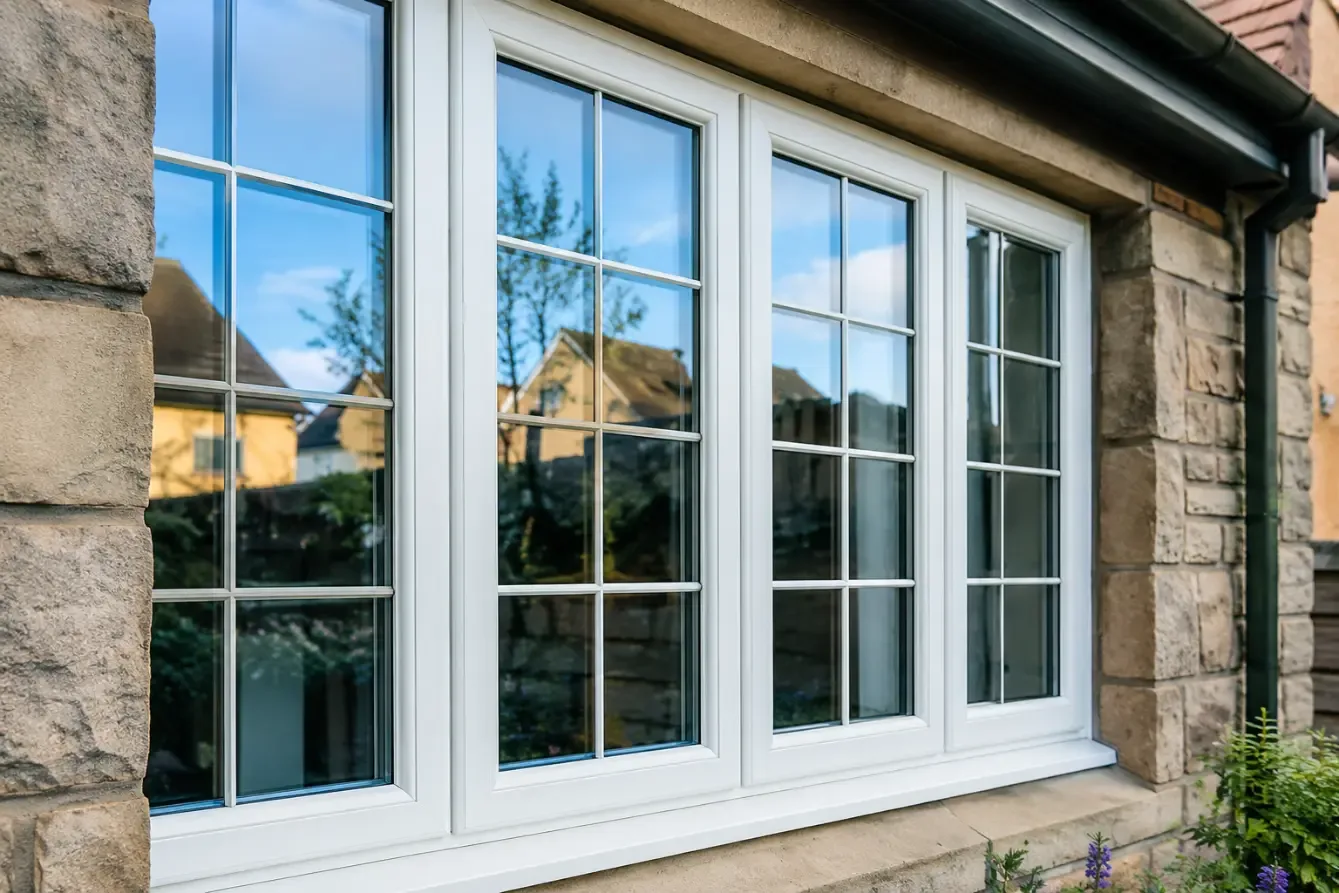
A flush sash is designed to sit level with the outer frame when closed. A standard casement commonly has a sash that sits proud of its frame. Sightlines vary between systems.
Look at the corner, meeting rail and external face of a full-size sample. A photograph can distort depth and colour, especially on a small screen.
Consider the whole window
Frame material, glazing bars, glass, handles and opening position contribute to the finished look. Confirm which combinations are available in the specific product range.
Ask whether the interior and exterior have the same finish and how any decorative bars are fitted. Put these details in the quotation and window schedule.
Match the property without overpromising
A flush profile can suit a restrained or traditional appearance, but a flush frame does not by itself make a product suitable for a listed building or conservation area.
Check the property-specific requirements before ordering and ask for drawings or samples that show the actual specification.
Explore your next step
General planning information updated 29 September 2026. Product specifications and the work for your home are confirmed in your quotation.